Nutraceutical Knowledge & Trends
Discover expert insights, scientific advancements, and global supply chain trends in natural ingredient solutions.
7 Best Medicinal Mushroom Extracts for Global Buyers
Table of Contents
- Define the “Best” 7 Extracts Using β-Glucan and Active-Marker Data
- Compare Reishi, Lion’s Mane, and Cordyceps by Extraction-Ratio Evidence
- Assess Chaga, Turkey Tail, Maitake, and Shiitake via Polysaccharide Data
- Verify COAs, Heavy-Metal Limits, Microbial Counts, and ISO Testing
- Rank Global Products by Certifications, Traceability, Dosage, and Compliance
- FAQS
- Conclusion
- Related Posts
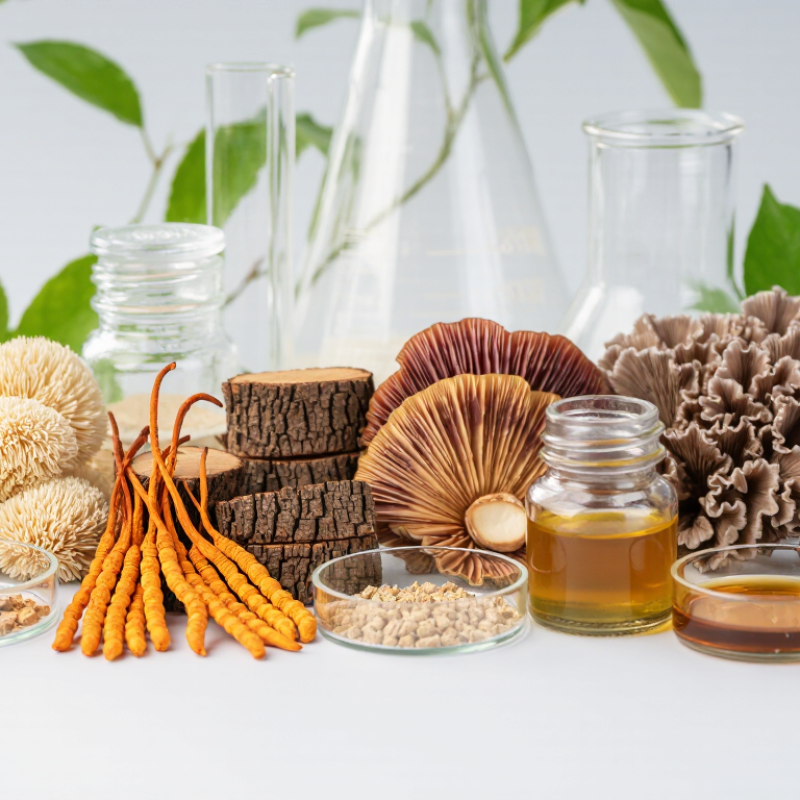
Medicinal Mushroom Extracts are moving from specialist shelves into global ingredient markets, wellness products, and carefully managed research programs. Buyers now face a crowded field: reishi, lion’s mane, cordyceps, chaga, turkey tail, maitake, and shiitake extracts can differ greatly in species, potency, and quality.
Mycologist Paul Stamets describes mushrooms as “miniature pharmaceutical factories,” a phrase that captures their biological complexity without promising a medical outcome. His perspective matters because responsible purchasing requires curiosity, evidence, and restraint. A polished label alone proves very little.
This guide examines seven widely traded Medicinal Mushroom Extracts for international buyers. It considers the mushroom species, extraction method, beta-glucan reporting, cultivation conditions, and available laboratory documentation. Water extracts, dual extracts, powders, and standardized concentrates may serve different commercial purposes.
The best choice is not universal.
A buyer in Germany may need different documentation than a distributor in Canada, Singapore, or Australia. Local rules can govern health claims, novel foods, supplements, contaminants, and labeling. Independent testing should check identity, heavy metals, pesticides, microbes, and unwanted adulterants. Certificates of analysis should match the actual batch, not merely a website sample.
Some comparisons remain imperfect. Research quality varies between species, suppliers, and product formats. Even “standardized” numbers can hide differences in testing methods. That is worth remembering.
For global procurement, reliability often begins with boring details: traceable farms, stable supply, clear specifications, transparent allergen statements, and responsive technical support. These practical signals may matter more than dramatic marketing language. The following seven extracts offer a grounded starting point for evaluating quality, suitability, and responsible international sourcing.
Define the “Best” 7 Extracts Using β-Glucan and Active-Marker Data
7 Best Medicinal Mushroom Extracts for Global Buyers
Define the “Best” 7 Extracts Using β-Glucan and Active-Marker Data
“Best” should mean measurable, traceable, and fit for purpose. For global buyers, seven extracts deserve close comparison: reishi, lion’s mane, cordyceps, chaga, turkey tail, maitake, and shiitake. β-glucan content offers a useful starting point, but it does not tell the whole story. Testing should identify the mushroom species, growing substrate, extraction method, and dry-basis percentage. Results from hot-water and dual extracts are not directly interchangeable.
Look beyond one number.
Reishi requires β-glucans plus triterpenes, such as ganoderic acids. Lion’s mane needs β-glucans and verified hericenones or erinacines. Cordyceps should show β-glucans and cordycepin when the species can produce it. Turkey tail benefits from polysaccharide profiling, including PSK-like compounds, while maitake is often assessed through β-glucans and D-fraction-related markers. Shiitake can be reviewed through β-glucans and lentinan data. Chaga requires β-glucan testing alongside triterpenes and polyphenol indicators.
The evidence is not perfectly uniform. Assay methods can produce different results. I would not accept a dramatic potency claim without a recent certificate of analysis. Check batch numbers, heavy-metal screening, microbial results, and solvent residues. Fruiting-body material may also differ from mycelial biomass. That difference matters. A practical purchasing decision combines marker data, transparent documentation, sensory inspection, and consistent batch performance. A cheaper extract is not automatically better value.
Compare Reishi, Lion’s Mane, and Cordyceps by Extraction-Ratio Evidence
7 Best Medicinal Mushroom Extracts for Global Buyers
Extraction ratios look impressive, but they do not prove stronger products. An 8:1 ratio means eight kilograms of raw material produced one kilogram of extract. It says little about beta-glucan content, species identity, or contaminant control. Grand View Research estimated the global medicinal mushroom market at about USD 26 billion in 2023, showing rising buyer interest. However, market growth does not replace laboratory evidence.
Reishi extracts deserve testing for beta-glucans and triterpenes. Hot-water extraction often supports polysaccharide recovery, while alcohol extraction may better capture triterpenes. Lion’s Mane requires closer attention to fruiting body versus mycelium material. A 2023 review in Journal of Fungi noted that hericenones and erinacines vary by growing substrate and extraction method. The ratio alone cannot confirm their presence.
Cordyceps products need even more careful verification. “Cordycepin” levels can differ sharply between cultivated species and extraction batches. Buyers should request third-party results using validated methods, such as HPLC for selected compounds and enzymatic testing for beta-glucans. ISO 22000-based systems may support process control, but certification is not proof of clinical benefit. Small details matter.
Some suppliers publish only a ratio. That is weak evidence. Others report marker compounds but omit moisture correction or test methods. This is where comparisons become imperfect. Global buyers should compare extraction ratio, measured actives, raw-material identity, heavy metals, microbes, and batch traceability together, not separately.
| Mushroom Extract | Scientific Name | Commonly Disclosed Extraction Ratio* | Preferred Extraction Approach | Key Compounds to Verify | Human Evidence Snapshot | Buyer Verification Priorities | Evidence Level |
|---|---|---|---|---|---|---|---|
| Reishi | Ganoderma lucidum / Ganoderma lingzhi | 1:5–1:10; concentrated products may state 10:1–20:1 | Hot-water extraction for beta-glucans; dual water–ethanol extraction is more suitable when triterpenes are included. | Beta-glucans, total polysaccharides, ganoderic acids or total triterpenes | Small clinical studies exist for immune and general health outcomes, but evidence is not sufficient to support disease-treatment claims. | Confirm fruiting body or mycelium source, beta-glucan testing, triterpene method, heavy metals, pesticides, and residual solvents. | Moderate but limited |
| Lion’s Mane | Hericium erinaceus | 1:4–1:8; ratios vary substantially by fruiting body or mycelium material | Hot-water extraction supports beta-glucans; alcohol or dual extraction may be used when diterpenes are targeted. | Beta-glucans, hericenones in fruiting bodies, erinacines mainly associated with mycelium | Several small human studies have examined cognition or mood-related outcomes; larger and longer trials are still needed. | Verify the biological material, beta-glucan percentage, erinacine or hericenone testing where claimed, and absence of grain-only filler. | Early clinical evidence |
| Cordyceps | Cordyceps militaris | 1:5–1:10; some products use standardized extracts instead of a ratio | Hot-water or dual extraction; cultivation species should be clearly identified because wild Ophiocordyceps sinensis is a different material. | Beta-glucans, cordycepin, adenosine, total nucleosides | Human studies have reported mixed findings for exercise capacity and fatigue-related measures; results depend on preparation and dose. | Confirm species identity, cordycepin and nucleoside assay, microbial safety, heavy metals, and whether the product is cultured mycelium or fruiting body. | Limited to moderate |
| Turkey Tail | Trametes versicolor | 1:5–1:10; polysaccharide-rich extracts are commonly specified by assay rather than ratio alone | Hot-water extraction is commonly used for polysaccharide and beta-glucan fractions. | Beta-glucans, polysaccharopeptide (PSP), polysaccharide peptide (PSK)-type fractions | Clinical research is more developed than for several other medicinal mushrooms, but supplement extracts should not be equated with pharmaceutical preparations. | Request validated beta-glucan testing, identity testing, contaminant screening, and clear separation of research-grade claims from food-supplement claims. | Moderate, preparation-dependent |
| Chaga | Inonotus obliquus | 1:5–1:10; powder-to-extract ratios are not directly comparable across suppliers | Hot-water extraction is commonly used; alcohol may be included for broader compound coverage. | Beta-glucans, polyphenols, triterpenoids, oxalates | Human evidence is limited. Traditional use and laboratory findings do not establish clinical effectiveness. | Test for oxalates, heavy metals, pesticides, species identity, and geographic origin; avoid relying on color or “high melanin” claims as potency proof. | Limited human evidence |
| Maitake | Grifola frondosa | 1:4–1:8; standardized beta-glucan content is more useful than ratio alone | Hot-water extraction is commonly used for beta-glucan-rich fractions. | Beta-glucans, proteoglucans, total polysaccharides | Small human studies have explored immune and metabolic markers, but findings remain preliminary and product-specific. | Verify beta-glucan assay, extraction solvent, species identity, allergen controls, microbial limits, and lot-to-lot consistency. | Preliminary |
| Shiitake | Lentinula edodes | 1:4–1:8; many commercial extracts are standardized to polysaccharides rather than ratio | Hot-water extraction is suitable for beta-glucans and other water-soluble polysaccharides. | Lentinan-type beta-glucans, beta-glucans, ergothioneine | Human research supports nutritional and immune-related interest, but extract-specific clinical evidence varies considerably. | Confirm fruiting body or mycelium source, beta-glucan content, ergothioneine method if claimed, and allergen and microbial testing. | Limited to moderate |
*Extraction ratios are commonly reported industry ranges and are not standardized across suppliers. A 10:1 ratio does not automatically mean ten times greater potency than a 5:1 ratio. For global purchasing, compare the declared raw-material input, extraction solvent, dry-extract yield, validated active-compound assay, species identity, and independent contaminant testing.
Assess Chaga, Turkey Tail, Maitake, and Shiitake via Polysaccharide Data
A practical buyer’s review starts with the extract, not the marketing label. Chaga, Turkey Tail, Maitake, and Shiitake deserve separate assessment. Their polysaccharide profiles can differ greatly after cultivation and processing. Total polysaccharides offer a useful starting point, but they do not prove equal activity. Beta-glucan content is usually more informative.
Look closely at the test method. Some laboratories measure total carbohydrates, while others use enzymatic beta-glucan assays. These results are not interchangeable. Ask for dry-basis values, batch numbers, extraction ratios, and independent certificates of analysis. A clear report should also identify the mushroom species and screen for heavy metals, microbes, pesticides, and residual solvents. Small details matter.
Turkey Tail often receives attention for its diverse polysaccharide fractions. Maitake and Shiitake may show valuable beta-glucan patterns, while Chaga requires careful identity testing because raw material can vary. Reishi, Cordyceps, and Agaricus complete the seven-extract comparison, but their data should not be ranked by one number alone. I would compare extraction solvent, fruiting-body origin, and assay consistency across several batches. The process is imperfect. A high polysaccharide percentage can still hide weak documentation or poor authenticity. Reliable purchasing needs repeatable evidence, not impressive wording.
7 Best Medicinal Mushroom Extract Sources for Global Buyers
Reported total polysaccharide ranges in dried mushroom source material (% of dry matter)
Maitake and Turkey Tail commonly show higher reported total-polysaccharide levels, while Cordyceps and Shiitake tend to show lower ranges. These values are indicative literature ranges rather than finished-extract specifications; results vary with species, cultivation conditions, fruiting body versus mycelium, extraction solvent, and analytical method. Buyers should confirm the exact extract ratio, beta-glucan profile, assay method, and batch-specific certificate of analysis.
Data basis: representative ranges reported in peer-reviewed compositional studies of medicinal and edible mushrooms; values are shown as approximate total polysaccharides on a dry-matter basis.
Verify COAs, Heavy-Metal Limits, Microbial Counts, and ISO Testing
7 Best Medicinal Mushroom Extracts for Global Buyers
A credible COA should identify the exact batch, test date, laboratory, and analytical method. It should not show only “pass” or “compliant.” For heavy metals, request lead, cadmium, arsenic, and mercury results with reporting limits. EFSA’s CONTAM Panel set cadmium’s tolerable weekly intake at 2.5 micrograms per kilogram of body weight. That figure is not a universal product limit. Destination rules still control purchasing decisions. WHO’s quality-control guidance also stresses contaminant testing for herbal materials, including metals and microorganisms.
Microbial data needs equal attention. Ask for total aerobic microbial count, yeast and mold, and specified pathogens. USP General Chapters 61 and 62 provide widely recognized approaches for enumeration and pathogen testing. However, limits may change with dosage form and market. A powder and a capsule should not receive identical assumptions. I would also question COAs using vague “ISO tested” language. ISO/IEC 17025 confirms laboratory competence, while ISO 22000 addresses food-safety management systems. Neither standard proves that every mushroom extract is pure or potent.
Tips: Match every COA to the shipped lot. Check the laboratory’s accreditation scope. Review sample preparation and detection limits. Request identity testing, preferably with DNA, microscopy, or chemical fingerprinting. Watch for unusually perfect results. Real testing sometimes shows variation. A supplier unable to explain that variation deserves another review.
Rank Global Products by Certifications, Traceability, Dosage, and Compliance
7 Best Medicinal Mushroom Extracts for Global Buyers
This ranking weighs certification, traceability, dosage clarity, and regulatory compliance. Reishi extract ranks highly when suppliers provide GMP production, batch-specific COAs, and tested beta-glucan levels. Chaga follows, but buyers should verify heavy-metal results because wild harvesting can increase exposure risks. Lion’s mane earns strong consideration when the label identifies fruiting body material and states the extraction ratio. The details matter.
Cordyceps extract can be useful for procurement comparisons, yet species identification must be precise. “Cordyceps” alone is not enough. Turkey tail ranks well when polysaccharide testing supports the stated specification. Maitake deserves attention where organic certification and documented farm locations are available. Shiitake extract is practical for larger orders, especially when allergen controls and sanitation records are transparent. Agaricus blazei completes the list, provided the supplier explains cultivation conditions and verifies each batch.
Dosage should be expressed in grams or milligrams, not vague serving language. A product listing should show extract ratio, active compounds, recommended use, and maximum daily guidance. Certificates should match the exact lot number. Check testing dates, laboratory accreditation, country-of-origin records, and import requirements before payment. Certifications help, but they do not replace independent verification. Some suppliers display attractive seals without explaining their scope. That is a weakness. I would also question unusually high potency claims without matching analytical data. Regulatory acceptance differs across markets, so local counsel or a qualified compliance specialist should review the final label.
FAQS
No. Ratio is only arithmetic. An 8:1 ratio means eight kilograms became one kilogram. It does not confirm active compounds, authenticity, or purity.
Review measured beta-glucans, marker compounds, species identity, and contaminant results. Check the method and dry-basis value. One impressive number is not enough.
Compare extraction solvent, raw material, measured actives, and batch consistency. Fruiting bodies and mycelium can produce different results. The comparison remains imperfect.
Related materials may contain different compounds. Growing conditions and substrates can also change results. Request identity testing using DNA, microscopy, or chemical fingerprints.
It should show the batch number, test date, laboratory, method, and detection limits. A simple “pass” statement is weak evidence. Match the document to the shipped lot.
Check lead, cadmium, arsenic, mercury, pesticides, residual solvents, and microorganisms. Ask for actual values, not only compliance language. Small details matter.
Look for total aerobic counts, yeast, mold, and specified pathogens. Limits may depend on the product form. Powders and capsules should not receive identical assumptions.
No. Laboratory accreditation supports testing competence. Food-safety certification supports process control. Neither proves clinical benefit, potency, or perfect purity.
Some variation is normal. Unusually perfect results deserve questions. I would not pretend every supplier explains variation clearly, so repeatable evidence matters.
Conclusion
Selecting the best Medicinal Mushroom Extracts for global buyers requires more than comparing product names or advertised potency. A reliable evaluation should examine beta-glucan levels, species-specific active markers, and extraction-ratio evidence. Reishi, Lion’s Mane, and Cordyceps can be compared through standardized extraction data, while Chaga, Turkey Tail, Maitake, and Shiitake should be assessed using transparent polysaccharide measurements and clearly defined testing methods. These indicators help buyers distinguish consistent extracts from products supported only by vague claims.
Quality and compliance are equally important. Buyers should request current Certificates of Analysis covering identity, active compounds, heavy metals, microbial counts, and other relevant safety parameters. ISO-based laboratory testing, batch traceability, suitable dosage information, and recognized certifications can further strengthen confidence in a product’s consistency and regulatory readiness. Ultimately, the strongest global options are those that combine measurable composition, verified quality controls, responsible documentation, and transparent sourcing rather than relying on marketing language alone.
Blog Tags: