Nutraceutical Knowledge & Trends
Discover expert insights, scientific advancements, and global supply chain trends in natural ingredient solutions.
Choosing reliable suppliers matters when plant extracts enter capsules, teas, functional foods, or clinical research. Consistency begins with the raw material.
Standardized Plant Extracts are designed to deliver a defined level of selected compounds. That promise sounds simple. It is not.
A dependable supplier should explain botanical identity, growing region, extraction solvent, marker compounds, and storage conditions. Clear documentation matters as much as a polished website. Buyers should request certificates of analysis, contaminant testing, pesticide screening, and batch-to-batch results. Traceability should reach the farm, not stop at the warehouse door.
Mark Blumenthal, founder and executive director of the American Botanical Council, has said, “Herbs are not drugs, but they can have drug-like effects.” This reminder supports careful sourcing, responsible communication, and appropriate quality controls.
The leading suppliers worldwide usually combine scientific testing with practical manufacturing experience. They may use HPLC fingerprints, validated assays, microbial testing, and controlled drying procedures. These details reveal whether standardization is meaningful or merely promotional language.
However, no supplier is perfect. A strong ranking must acknowledge regional differences, changing harvest conditions, and incomplete public data. Some companies publish impressive specifications but provide limited evidence behind them. That deserves scrutiny.
This introduction explores major Standardized Plant Extracts suppliers, their technical capabilities, certifications, sourcing practices, and documentation standards. It also considers responsiveness, manufacturing scale, and transparency. The goal is not to reward the loudest brand. It is to identify suppliers that consistently support safer, more reproducible botanical products.
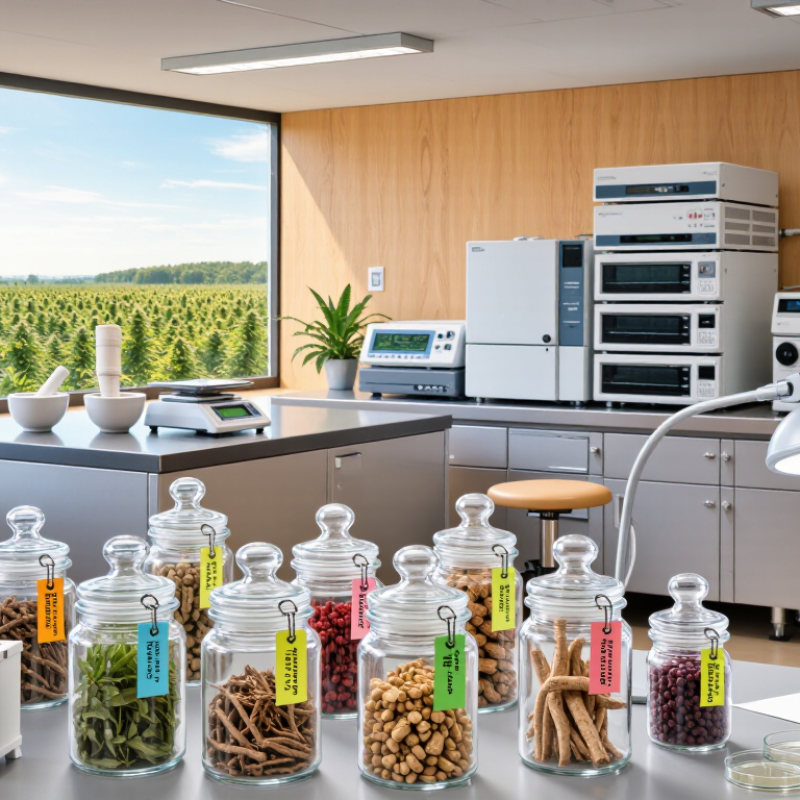
What Are Standardized Plant Extracts?
Top Standardized Plant Extracts Suppliers Worldwide
What Are Standardized Plant Extracts?
Standardized plant extracts are botanical concentrates adjusted to contain a defined level of selected active markers. For example, a supplier may declare 20% flavonoids or 5% ginsenosides. This does not mean every compound is identical. It means the tested marker stays within an agreed range.
Reliable production begins with botanical identity. Experts verify the plant species, plant part, harvest region, and extraction solvent. They also test moisture, microbial limits, heavy metals, pesticides, and adulteration. The WHO Global Report on Traditional and Complementary Medicine recorded traditional medicine use in 170 of 194 Member States. That scale increases the need for traceable and repeatable raw materials. USP botanical standards also emphasize identity, purity, strength, and contaminant control.
Yet, standardization has limits. One marker cannot represent the entire plant. Climate, soil, drying temperature, and storage can change the chemical profile. A neat certificate may hide these variations. This is where supplier documentation matters. Ask for batch-specific test results, validated analytical methods, reference standards, and stability data. High-quality suppliers should explain whether results use HPLC, GC, or another method.
Tips: Compare the declared marker with the extract ratio. Check the Latin species name and plant part. Request independent laboratory testing when the application is sensitive. Do not choose a supplier based only on a high percentage. Sometimes, the strongest number is not the most meaningful quality signal.
Top Standardized Plant Extracts Suppliers Worldwide - What Are Standardized Plant Extracts?
Standardized plant extracts are botanical preparations manufactured to contain a defined and reproducible level of one or more marker compounds, active constituents, or characteristic compound groups. The specifications below represent commonly used commercial standards; actual values may vary according to plant species, plant part, extraction solvent, analytical method, and applicable regulations.
| Extract Type | Common Plant Part | Typical Standardization Basis | Common Commercial Specification | Primary Analytical Approach | Typical Applications | Key Supplier Documentation to Request |
|---|---|---|---|---|---|---|
| Milk Thistle Silybum marianum |
Fruit or seeds | Silymarin complex | Often standardized to approximately 70–80% silymarin | HPLC or validated chromatographic assay | Botanical supplements and liver-support formulations | Certificate of analysis, botanical identity, pesticide report, solvent-residue report, heavy-metal and microbiological results |
| Ginkgo Ginkgo biloba |
Leaves | Flavone glycosides and terpene lactones | Common reference profile: 24% flavone glycosides and 6% terpene lactones | HPLC and related validated chromatographic methods | Cognitive-health and circulation-support products | Species verification, ginkgolic-acid limits, chromatographic fingerprint, contaminant testing and stability data |
| Green Tea Camellia sinensis |
Leaves | Total catechins, EGCG, and caffeine | Catechin specifications commonly range from about 40–80%; EGCG is declared separately when required | HPLC or UPLC for catechin and caffeine profiling | Antioxidant, sports-nutrition and weight-management formulations | Caffeine content, catechin profile, solvent residues, pesticide results and oxidation or stability information |
| Turmeric Curcuma longa |
Rhizomes | Total curcuminoids, including curcumin, demethoxycurcumin and bisdemethoxycurcumin | Conventional extracts are frequently standardized to approximately 95% total curcuminoids | HPLC or UPLC profile of individual curcuminoids | Joint-health, antioxidant and general wellness products | Curcuminoid assay, identity testing, residual-solvent data, adulteration screening and particle-size information |
| Ashwagandha Withania somnifera |
Roots, or roots and leaves depending on the specification | Withanolide content or a defined withanolide profile | Commercial specifications commonly fall within approximately 2.5–5% total withanolides, but are product-specific | HPLC or LC-MS-based marker analysis | Stress-support, sleep-support and sports-nutrition products | Plant-part declaration, species authentication, withanolide profile, pesticide testing and microbial limits |
| Saw Palmetto Serenoa repens |
Fruits | Total fatty acids, with optional sterol profile | Common extracts are standardized to approximately 85–95% fatty acids | Gas chromatography of fatty-acid composition | Men’s health and urinary-tract-support formulations | Fatty-acid profile, solvent-residue results, oxidation indicators, authenticity testing and geographical traceability |
| Boswellia Boswellia serrata |
Gum resin | Total boswellic acids or AKBA | Total boswellic-acid specifications commonly range from about 60–90%; AKBA is declared separately for some grades | HPLC or UPLC triterpene profile | Joint comfort and inflammatory-response-support products | Boswellic-acid profile, botanical identity, adulteration testing, heavy metals and residual-solvent analysis |
| Ginseng Panax ginseng |
Roots | Total ginsenosides and individual ginsenoside pattern | Standardized grades commonly specify approximately 10–20% total ginsenosides | HPLC or UPLC ginsenoside profile | Energy, fatigue-support and cognitive-support formulations | Species authentication, ginsenoside fingerprint, pesticide report, microbial testing and origin documentation |
| Ginger Zingiber officinale |
Rhizomes | Gingerols and related pungent compounds | Specifications may target approximately 5% total gingerols or another validated marker level | HPLC or LC-MS marker analysis | Digestive-health, nausea-support and sports-recovery products | Gingerol profile, identity testing, volatile-oil information, pesticide results and microbiological data |
| Rhodiola Rhodiola rosea |
Roots and rhizomes | Rosavins and salidroside | A frequently used reference profile is about 3% rosavins and 1% salidroside | HPLC or validated chromatographic fingerprinting | Stress, mental-performance and fatigue-support formulations | Species and plant-part verification, rosavin-to-salidroside ratio, adulteration screening and origin records |
| Licorice Glycyrrhiza glabra or related species |
Roots and stolons | Glycyrrhizin or glycyrrhetinic-acid derivatives | Extracts may be standardized to approximately 10–20% glycyrrhizin, depending on grade | HPLC or ion-pair chromatographic assay | Digestive, throat-soothing and flavoring applications | Species confirmation, glycyrrhizin assay, pesticide and heavy-metal testing, plus regulatory labeling information |
FAQS
China provides diverse botanical materials and large-scale extraction capacity. India contributes herbs, spices, and traditional plant ingredients. Europe emphasizes traceability and strict quality controls. North America adds testing, formulation, and distribution expertise.
Latin America supplies fruits, roots, and rainforest botanicals. Brazil and Peru have strong agricultural potential. Transport can become difficult outside major cities. That gap matters.
Request botanical identity, extraction ratios, solvent details, and contaminant results. Every batch should include a lot number and production date. Recent certificates matter more than attractive brochures.
Testing should cover heavy metals, microbes, pesticides, and residual solvents. Marker-compound levels also need verification. Independent laboratories can compare supplier claims with actual samples. Numbers can still mislead.
Cold storage can reduce damage during transportation. Sealed liners help protect powders from moisture and contamination. Review stability data under realistic storage conditions. A warehouse shelf is not a laboratory.
They often enter dietary supplements, functional beverages, and fortified foods. Suppliers may declare ranges for polyphenols, saponins, or other marker compounds. The stated percentage does not guarantee equal performance.
Specialty suppliers may control solvents, microbes, color, odor, and batch consistency. These details can affect a product’s appearance and skin compatibility. Potency alone is insufficient.
High potency may reflect excellent processing or poor interpretation. Ask for validated methods, recent certificates, and sample comparisons. Independent testing can clarify the difference. I would still remain cautious.
Conclusion
Standardized Plant Extracts are botanical ingredients processed to deliver a consistent concentration of selected active compounds, helping manufacturers achieve reliable performance from batch to batch. Their quality depends on controlled cultivation, careful harvesting, suitable extraction methods, and validated testing. Standardization may include identifying marker compounds, confirming potency, and checking purity, identity, moisture, microbial limits, residues, and potential contaminants through documented quality-control procedures.
The global supply market includes major production and processing regions across Asia, Europe, the Americas, and other established botanical trade centers. When evaluating international suppliers, buyers should consider technical capabilities, traceability, regulatory compliance, testing transparency, production capacity, sustainability practices, and supply reliability. Leading supplier categories serve diverse industries, including food and beverages, dietary supplements, cosmetics, personal care, and pharmaceutical research. Selecting a qualified partner requires balancing consistent product specifications with dependable documentation, responsible sourcing, and the ability to meet application-specific requirements.