Nutraceutical Knowledge & Trends
Discover expert insights, scientific advancements, and global supply chain trends in natural ingredient solutions.
How to Source Organic Mushroom Adaptogens in Bulk?
Table of Contents
- Defining Organic Mushroom Adaptogens and Their Bulk-Sourcing Uses
- Identifying Reliable Organic Mushroom Adaptogen Suppliers
- Checking Organic Certification, Testing, and Product Quality
- Comparing Pricing, Minimum Orders, and Supply Terms
- Managing Bulk Storage, Documentation, and Ongoing Supplier Reviews
- FAQS
- Conclusion
- Related Posts
Sourcing Organic Mushroom Adaptogens in bulk requires more than comparing prices per kilogram. Buyers must understand species, cultivation methods, extraction ratios, and certification requirements. A low quote can hide weak traceability or inconsistent potency. That matters.
Experienced procurement teams usually begin with the supplier’s farm records. They review growing substrates, harvest dates, drying temperatures, and storage conditions. Clear batch identification should follow every shipment. A reliable supplier can provide current certificates of analysis, organic documentation, allergen statements, and contaminant testing. Heavy metals, pesticides, microbes, and residual solvents deserve careful attention.
The word “organic” also needs context. Certification standards differ between markets, so buyers should verify the issuing body and certificate scope. Ask whether the certification covers cultivation, processing, or both. Product specifications should state the mushroom species, fruiting body or mycelium source, beta-glucan content, extraction solvent, and serving format. Vague language creates avoidable risk.
Practical sourcing includes more than laboratory paperwork. Request representative samples, inspect packaging, and compare results across several batches. Small discrepancies may reveal seasonal variation or unstable processing. Discuss minimum order quantities, lead times, pallet conditions, and temperature exposure before signing agreements. A dependable partner communicates delays early and corrects documentation errors without defensiveness.
No checklist is perfect. Even polished suppliers may need closer questioning. Organic Mushroom Adaptogens should therefore be purchased through documented verification, transparent communication, and realistic quality expectations. Careful buyers protect product integrity while building a supply chain that can support consistent production and responsible customer claims.
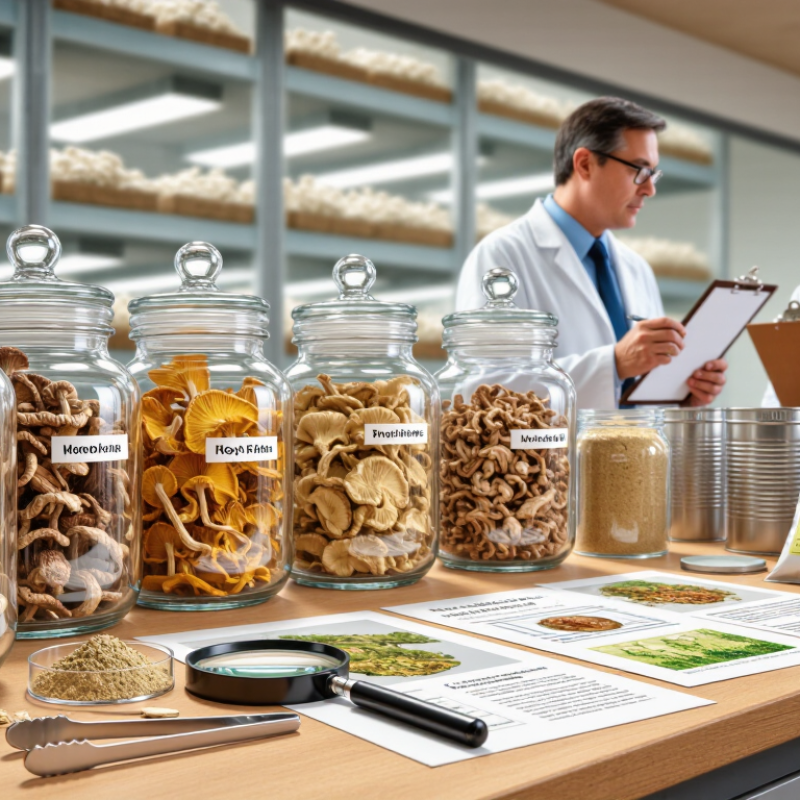
Defining Organic Mushroom Adaptogens and Their Bulk-Sourcing Uses
Organic mushroom adaptogens are fungi marketed for stress resilience and general wellness. “Adaptogen” remains scientifically and legally uneven, not a universal ingredient class. Common examples include reishi, lion’s mane, cordyceps, and chaga. Bulk applications include powders, hot-water extracts, drink mixes, capsules, and functional foods. Grand View Research forecasts functional mushroom market growth at roughly 9% annually through 2030. Organic demand is also significant. The Organic Trade Association reported US$67.6 billion in United States organic sales during 2023, a 3.5% annual increase.
When sourcing pallet quantities, define the material before comparing prices. Specify species, cultivated strain, country, substrate, and whether the product uses fruiting bodies, mycelium, or both. Request organic certificates covering the actual facility and product scope. Organic certification does not prove potency. Require batch-specific certificates of analysis for beta-glucans, moisture, microbes, pesticides, heavy metals, and identity. For extracts, record the solvent, extraction ratio, and carrier ingredients. A cheap 10:1 powder may not equal a concentrated extract. That difference is easy to miss.
Reliable suppliers should provide harvest records, lot codes, retain samples, and a documented recall process. Independent laboratory verification is valuable for imported powders. Avoid disease-treatment promises in labels and sales materials. Those claims create regulatory exposure. Test flavor and solubility in the intended formula before signing a long contract. Consistency remains difficult because natural batches vary. Even careful specifications cannot remove every seasonal difference. Build acceptance limits, pilot orders, and a second qualified supplier into the purchasing plan.
Identifying Reliable Organic Mushroom Adaptogen Suppliers
Sourcing organic mushroom adaptogens in bulk starts with supplier verification, not attractive pricing. I would request the current organic certificate, facility address, species list, and country of cultivation. The certificate should match the exact product and processing site. Under the USDA National Organic Program, certification applies to defined production and handling practices, not vague “natural” claims. That distinction matters.
Market growth increases the risk of inconsistent sourcing. The Organic Trade Association reported US organic sales of $69.7 billion in 2023. FAOSTAT also recorded more than 12 million tonnes of global mushroom and truffle production in 2022. Large volumes do not guarantee medicinal quality. Ask suppliers for batch-specific certificates of analysis, including beta-glucan content, species authentication, moisture, microbial limits, pesticides, heavy metals, and solvent residues. Prefer laboratories accredited to ISO/IEC 17025.
Visit the growing or processing facility when possible. Look for clean drying rooms, traceable substrate records, sealed bulk packaging, and controlled temperature storage. Extract ratios need clarification. “10:1” alone says little without raw-material weight and testing methods. I would compare three recent batches, not one impressive sample. A polished certificate is not proof of consistency. Suppliers should explain failed tests honestly and provide corrective actions. Some vendors may lack perfect documentation, but unexplained gaps deserve a slower purchase, smaller pilot order, and independent retesting.
How to Source Organic Mushroom Adaptogens in Bulk?
Identifying Reliable Organic Mushroom Adaptogen Suppliers
This suggested screening framework prioritizes certification and traceability, active-compound testing, contaminant control, and transparent raw-material sourcing. Request current certificates, batch-specific laboratory reports, and documentation for every production lot before placing a bulk order. The percentages are practical evaluation weights, not market-share data or ratings for any specific company.
Checking Organic Certification, Testing, and Product Quality
How to Source Organic Mushroom Adaptogens in Bulk?
Bulk sourcing starts with certification, not packaging. Request the current organic certificate, scope, certifier, and expiry date. Confirm it covers the mushroom ingredient and processing facility. A farm certificate may not cover extraction or drying. USDA organic rules also require handlers to prevent commingling and contamination. The Organic Trade Association reported US organic sales of $69.7 billion in 2023. USDA’s 2022 Organic Survey recorded $9.6 billion in certified organic farm sales. These figures show a large market, but not automatic quality.
Testing should match the risks of each lot. Ask for a lot-specific certificate of analysis, not a generic template. It should list Latin species, material type, extraction ratio, production date, and laboratory details. Check beta-glucans separately from total polysaccharides. Test heavy metals, pesticides, microbes, mycotoxins, and undeclared carriers. DNA testing can support identification, but processed extracts may reduce its usefulness. One test cannot prove everything. I would rather reject an attractive low-cost lot than explain inconsistent results later.
Tips: Compare three recent COAs from the same supplier. Call the laboratory and verify the report number. Keep sealed retention samples beside purchase records. Check whether the certificate matches the shipping country and facility address. Ask for corrective-action records when results fail. Suppliers sometimes provide incomplete answers. That is a warning, not a minor inconvenience. Avoid unsupported claims such as “detox” or “immune boosting”; verify permitted wording before publishing product copy.
Comparing Pricing, Minimum Orders, and Supply Terms
Sourcing organic mushroom adaptogens in bulk starts with comparing the complete offer, not the lowest quoted kilogram price. A supplier may quote $28 per kilogram, while another quotes $34 with testing and freight preparation included. Request tiered pricing at 25, 100, and 500 kilograms. Record whether prices cover packaging, pallet fees, certificates, and delivery to your warehouse. Minimum order quantities can reshape the decision. A low unit price is less useful if the required 300-kilogram order ties up cash or risks aging inventory. Ask about sample quantities first. Five kilograms may reveal blending, moisture, aroma, and powder flow problems that a polished specification misses. That assumption was too simple.
Supply terms deserve the same scrutiny as price. Confirm harvest or production timing, batch lead time, payment milestones, and acceptable substitution rules. Ask whether every shipment receives a batch-specific certificate of analysis, organic documentation, heavy-metal screening, microbiological results, and identity testing. “Organic” should be verified through current certification and traceable lot records, not a sales email. Clarify whether the supplier holds safety stock and how shortages are allocated. Some contracts allow a 10 percent quantity variation; that can disrupt filling schedules and costing. Negotiate written limits for moisture, particle size, marker-compound reporting, and damaged packaging. I have found that buyers often compare spreadsheets but overlook port delays and customs responsibilities. Incoterms matter. So do claims procedures. Leave room for a small pilot order before committing to annual volumes, because supplier consistency can look excellent once and disappoint later.
Managing Bulk Storage, Documentation, and Ongoing Supplier Reviews
How to Source Organic Mushroom Adaptogens in Bulk?
Bulk sourcing starts with a storage plan, not a purchase order. Keep powders in sealed, food-grade containers, away from light, heat, and moisture. A practical warehouse target is below 25°C, with humidity monitored daily. Use lot codes on every container. Records matter. The 2024 Organic Trade Association survey valued U.S. organic sales at $67.6 billion in 2023, showing strong demand but also greater documentation pressure.
Request current organic certificates, certificates of analysis, allergen statements, and pesticide-residue results from each supplier. Verify the certifier through the USDA Organic Integrity Database when applicable. Do not treat a certificate as permanent proof. Check its expiry date and product scope. Testing should identify species, growing substrate, moisture, microbial counts, heavy metals, and undeclared fillers. The European Food Safety Authority’s guidance on botanicals also supports careful identity and safety assessment, although “adaptogen” itself is not a universal regulatory category.
Review suppliers at least annually, and sooner after failed tests or major process changes. Compare delivery accuracy, batch consistency, complaint response, and corrective actions. Keep retained samples from every lot for later investigation. A simple scoring sheet works. It is not perfect. My own weak point has been overvaluing attractive laboratory numbers while ignoring late documentation. That mistake can disrupt production. Recheck supplier records, storage temperatures, and inventory rotation every month. The FAO’s 2022 food safety reporting also emphasizes traceability as a practical control across food supply chains.
How to Source Organic Mushroom Adaptogens in Bulk? - Managing Bulk Storage, Documentation, and Ongoing Supplier Reviews
| Sourcing Area | Control Point | Recommended Bulk Requirement | Required Evidence | Review Frequency | Corrective Action |
|---|---|---|---|---|---|
| Organic Status | Confirm that the product and applicable handling activities are covered by a valid organic certification. | Certification must be current for the relevant production, processing, storage, and trading scope. | Current organic certificate, scope or schedule, certificate number, issue date, expiry date, and transaction documentation where required. | Before approval, before each annual renewal, and whenever the certified scope changes. | Place the supplier on hold until certification and scope are verified independently. |
| Species Identity | Verify the declared mushroom species and the material form, such as fruiting body, mycelium, or mixed biomass. | The scientific name, plant part or biomass source, extraction status, and excipient details must match the purchase specification. | Approved specification, supplier declaration, batch record, certificate of analysis, and identity-test result. | Every new material and every incoming lot. | Quarantine the lot and investigate any mismatch before release. |
| Active Marker Profile | Define measurable markers appropriate to the mushroom and product type. | Use a declared test method, reporting unit, acceptance range, and sampling plan; do not rely only on an extract ratio. | Batch-specific analytical report with method reference, result, specification, and laboratory authorization details. | Every lot, with periodic independent verification. | Reject, retest through an approved laboratory, or open a deviation investigation according to the quality procedure. |
| Contaminant Control | Assess microbiological, heavy-metal, pesticide, mycotoxin, and residual-solvent risks according to the product and market. | Acceptance limits must be defined before purchasing and aligned with the destination market and intended use. | Certificate of analysis, test methods, laboratory results, and documented risk assessment. | Every lot for critical contaminants; trend review at least quarterly. | Hold the lot, notify quality management, and investigate source, processing, and transport conditions. |
| Bulk Packaging | Protect powder or extract from moisture, oxygen, light, pests, and foreign material. | Use clean, food-contact-compatible, sealed packaging with tamper evidence where appropriate; avoid damaged or unsealed bags and drums. | Packaging specification, seal inspection record, pallet condition check, and photographs for damaged deliveries. | At receipt and during each warehouse inspection. | Segregate affected units, document damage, and request supplier disposition. |
| Storage Environment | Control temperature, humidity, light exposure, cleanliness, and pest activity. | Use the approved product specification; as an internal planning target, maintain a clean, dry area at 15–25°C and relative humidity at or below 60% unless the supplier specification requires tighter limits. | Calibrated temperature and humidity records, cleaning logs, pest-control records, and excursion reports. | Continuous or daily monitoring, with documented monthly trend review. | Evaluate exposure time, test affected material if needed, and release only after quality approval. |
| Inventory Rotation | Prevent ageing and ensure complete lot traceability. | Use FEFO, or first-expire-first-out, where expiry dates are assigned; maintain clear lot separation and pallet identification. | Inventory ledger showing lot number, receipt date, quantity, expiry or retest date, location, and status. | At every stock movement and during monthly cycle counts. | Block unidentified or overdue stock and reconcile records before use. |
| Moisture and Physical Quality | Monitor moisture-related caking, odor, discoloration, infestation, and foreign matter. | Set material-specific moisture or water-activity limits; visual inspection must show no mold, infestation, leakage, or abnormal odor. | Incoming inspection form, moisture or water-activity result where specified, and deviation record. | Every lot at receipt and after any storage excursion. | Quarantine the material and conduct a documented quality assessment. |
| Documentation Package | Maintain a complete document set for purchasing, release, audits, and recalls. | Include specification, certificate of analysis, organic certificate, allergen statement, non-GMO statement where applicable, safety data, and traceability records. | Controlled document register with revision number, approval date, owner, and expiry or review date. | Before first purchase and at least annually thereafter. | Suspend purchasing until missing or expired documents are resolved. |
| Traceability and Recall Readiness | Link finished goods to the incoming bulk lot and supplier production information. | The system should identify one step backward and one step forward, including quantities received, used, remaining, and distributed. | Lot genealogy, receiving records, production records, dispatch records, and mock-recall results. | Mock recall at least annually and after major system changes. | Investigate reconciliation gaps and implement documented preventive actions. |
| Supplier Performance | Measure consistency, service reliability, documentation quality, and quality incidents. | Track on-time delivery, lot acceptance, document completeness, complaint rate, response time, and corrective-action closure. | Supplier scorecard with defined targets, weighting, evidence, and approval status. | Quarterly for active suppliers; more frequently for critical or higher-risk materials. | Create a corrective-action plan, increase testing, or suspend the supplier based on risk. |
| Supplier Requalification | Reassess the supplier when products, processes, sites, ownership, certification, or regulatory requirements change. | Maintain documented change notification requirements and a risk-based audit or assessment program. | Requalification checklist, audit report, updated certifications, change notices, and management approval. | At least every 12–24 months, or immediately after a critical change or serious incident. | Require additional evidence, conduct an audit, or remove the supplier from the approved list. |
FAQS
They are organically produced fungi marketed for stress resilience and general wellness. The term “adaptogen” lacks one universal scientific or legal definition. Common materials include reishi, lion’s mane, cordyceps, and chaga.
Specify the species, cultivated strain, country, and growing substrate. Confirm whether the material contains fruiting bodies, mycelium, or both. Also record the extraction method, ratio, and carrier ingredients.
No. Organic certification mainly addresses production and handling standards. Request batch-specific testing for beta-glucans, moisture, microbes, pesticides, heavy metals, and identity. Certification is not a potency guarantee.
A 10:1 powder may not equal a concentrated extract. Extraction methods and raw materials can differ greatly. Check the solvent, extraction ratio, and final carrier ingredients. That difference matters.
Ask for current organic certificates, certificates of analysis, allergen statements, pesticide results, harvest records, and lot codes. Suppliers should also maintain retain samples and a written recall process. Missing paperwork creates avoidable delays.
Keep powders in sealed, food-grade containers away from light, heat, and moisture. Aim for storage below 25°C, with humidity checked daily. Mark every container with its lot code. Rotate inventory monthly.
Independent laboratory testing can verify species, substrate, moisture, microbial counts, heavy metals, and undeclared fillers. Test flavor and solubility in the intended formula before signing a long contract. Results can still vary between natural batches.
Review each supplier at least annually, or sooner after failed tests and major process changes. Compare delivery accuracy, batch consistency, complaint handling, and corrective actions. A simple scoring sheet helps, but it is imperfect.
Use pilot orders, clear acceptance limits, and a second qualified supplier. Keep retained samples from every lot for later investigation. I might overvalue attractive laboratory numbers and overlook late documents. That mistake can disrupt production.
Conclusion
Sourcing Organic Mushroom Adaptogens in bulk requires a clear understanding of their intended uses, forms, and quality requirements. Buyers should first define whether they need powders, extracts, capsules, or other formats, then identify suppliers with consistent production capabilities, transparent sourcing practices, and reliable communication. Evaluating organic certification, third-party testing, ingredient identity, potency, contaminant screening, and batch consistency is essential for protecting product quality and customer trust.
Cost comparisons should include unit pricing, minimum order quantities, lead times, payment terms, shipping, and the supplier’s ability to scale with future demand. Once purchased, Organic Mushroom Adaptogens should be stored under suitable conditions that protect them from moisture, heat, light, and contamination. Detailed records, including certificates, test reports, batch numbers, and invoices, should be maintained for traceability. Regular supplier reviews can help confirm continued compliance, stable quality, dependable delivery, and fair commercial terms over time.

Blog Tags: