Industry Insights & Research

Nutraceutical Knowledge & Trends

Discover expert insights, scientific advancements, and global supply chain trends in natural ingredient solutions.

0%

Global buyers are increasingly seeking clean, practical ingredients for beverages, bakery products, supplements, and functional foods. Organic Fruit Powders can provide concentrated flavor, natural color, and convenient year-round storage. They also reduce handling compared with fresh fruit, especially during international sourcing.

However, choosing the right powder requires more than attractive packaging. Experienced buyers inspect the fruit origin, organic certification, processing method, moisture level, particle size, and microbiological test results. A vivid strawberry powder may look impressive, yet its aroma, solubility, and stability still need careful verification. Certificates of analysis, allergen statements, and traceability records can reveal important details.

This guide presents seven strong options for global purchasing teams. Each choice is considered through practical factors, including ingredient purity, taste consistency, documentation, packaging protection, and supplier reliability. The review also recognizes that standards differ between markets. Organic certification accepted in one country may require additional approval elsewhere. That detail is easy to overlook.

No powder is perfect for every application. Some dissolve smoothly in cold water, while others perform better in baked products. Some retain a fresh color, but lose intensity after extended storage. These limitations deserve honest attention. Buyers should request samples, compare test results, and confirm import requirements before placing large orders. Supplier claims are useful, but independent verification is stronger. The following selection is a starting point, not a final purchasing decision.
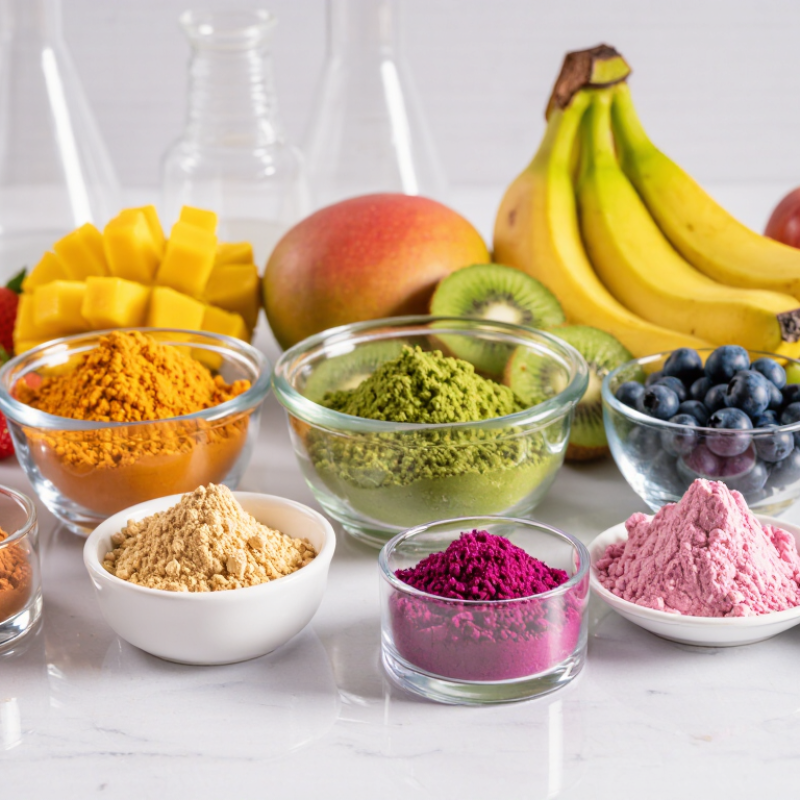
7 Best Organic Fruit Powders for Global Buyers

What Organic Fruit Powders Are and How They Are Made

What Organic Fruit Powders Are and How They Are Made

Organic fruit powders are finely milled fruits with most moisture removed. They may contain the whole fruit, pulp, juice solids, or selected parts. Their color, aroma, and nutrients depend on the fruit and processing method.

The production chain begins with certified organic fruit. Suppliers inspect farm records, harvest conditions, and traceability documents. Workers then wash, sort, and cut the fruit before drying it. Freeze-drying protects delicate flavor and color but usually costs more. Spray drying suits fruit juices and creates a smooth, quick-dispersing powder. Drum drying can produce stronger cooked notes. Each method changes the final product.

The FiBL and IFOAM Organics International report recorded a global organic market worth about €135 billion in 2022. It also reported 96.4 million hectares of organic farmland. These figures show strong supply potential, not guaranteed quality. Organic status does not automatically mean higher nutrition. Testing still matters.

Tips: Ask for the current organic certificate, product specification, moisture level, microbiological results, heavy-metal testing, and allergen statement. Check whether maltodextrin, carriers, or added sugar are included. Review the lot code and country of origin. Powder can cake in humid warehouses. Use sealed, moisture-resistant packaging. Small samples reveal problems sooner.

Key Standards for Evaluating Organic Fruit Powders

For global buyers, organic fruit powder quality begins with evidence, not a vivid color or sweet aroma. Ask for a current organic certificate matching the processing site, product name, and shipment scope. Certification alone is not enough. The certificate should connect to an auditable chain from orchard records to drying and packing. Lot codes, harvest dates, and origin documents should align without unexplained gaps. Organic rules differ by market, so import requirements must be checked before contracting.

A reliable specification should state fruit percentage, moisture, water activity, particle size, solubility, and permitted processing aids. Check whether maltodextrin, anti-caking agents, or carriers are present. Independent laboratory reports should cover pesticide residues, heavy metals, microbiological hazards, and relevant mycotoxins. Test methods, detection limits, sample dates, and lot numbers matter. A certificate of analysis without a matching lot is weak evidence. In supplier audits, a clean-looking sample can hide poor storage conditions. That mistake is expensive.

Sensory evaluation still matters. Compare color, acidity, aroma, and sediment after mixing the powder in cold water. Natural variation is normal, while a neon color deserves questions. Packaging should block moisture and oxygen, with tamper evidence and clear storage instructions. Review allergen controls, recall procedures, and supplier response times. Request a small pilot shipment before a large order. A second test may reveal what the first missed.

Seven Leading Organic Fruit Powders for Global Buyers

Seven Leading Organic Fruit Powders for Global Buyers

Organic fruit powders offer global buyers practical flavor, color, and nutrition options. The strongest choices include acerola, blueberry, strawberry, mango, banana, raspberry, and pomegranate powders. Each has a distinct sensory profile and processing challenge. Acerola powder provides bright acidity and naturally occurring vitamin C. Blueberry powder adds deep color, but its shade may vary with drying temperature. Strawberry powder delivers a familiar aroma, although its seeds can affect texture.

Mango and banana powders work well in smoothies, bakery mixes, and instant beverages. Mango usually brings tropical sweetness, while banana contributes body and a soft mouthfeel. Raspberry powder offers sharp fruit notes and visible seed particles. Pomegranate powder can provide tartness and a rich red tone, but it may taste intense in concentrated formulas. In my sourcing experience, low moisture and suitable packaging matter as much as fruit selection. Humidity can cause clumping within weeks.

Buyers should review organic certificates, botanical names, country of origin, harvest details, and microbiological test results. Specifications should also state moisture, mesh size, carrier use, and allergen controls. Organic rules differ between markets, so one certificate may not satisfy every destination. Not every powder performs perfectly. Natural color changes are normal. A sample can look excellent yet dissolve poorly in a finished drink. Pilot testing remains essential before committing to volume. Check the powder under actual shipping and storage conditions. That step is often overlooked.

Comparing Flavor, Nutrition, Applications, and Market Demand

7 Best Organic Fruit Powders for Global Buyers

Flavor, nutrition, applications, and demand vary sharply across organic fruit powders. Strawberry powder offers a bright aroma and natural pink color for yogurt, bakery fillings, and drink mixes. Blueberry powder brings deeper color and polyphenols, but heat can dull its flavor. Banana powder tastes creamy and works well in smoothies, cereals, and infant-food formulations. USDA FoodData Central confirms that fruit nutrition changes with moisture removal, so buyers should compare nutrients per serving, not per 100 grams.

Mango powder delivers strong tropical flavor and suits sauces, beverages, and snack coatings. Acerola powder is valued for its naturally high vitamin C content, according to USDA nutritional data, though its sourness needs careful blending. Raspberry powder adds seeds, acidity, and a sharper sensory profile. Apple powder is milder, more adaptable, and useful in bakery mixes, fillings, and instant beverages. Texture matters. Fine particles disperse better, while coarse powder may preserve a more noticeable fruit character.

Market demand supports practical diversification. The Organic Trade Association reported US organic sales of 67.6 billion dollars in 2023, including 63.8 billion dollars in organic food sales. FiBL and IFOAM reported a global organic market of about 134.8 billion euros in 2022. These figures show strong demand, but they do not guarantee equal demand for every fruit powder. Buyers should check origin, harvest variation, moisture, microbiological results, pesticide testing, and certification scope. I would not rank acerola above strawberry for every market. Taste expectations differ, and product developers sometimes underestimate color instability during storage.

7 Best Organic Fruit Powders for Global Buyers - Comparing Flavor, Nutrition, Applications, and Market Demand
Organic Fruit Powder Typical Flavor Profile Representative Nutrition per 100 g Key Nutritional or Functional Value Common Commercial Applications Water Dispersibility Global Market Demand Buyer Considerations
Acerola Powder Bright, tart, citrus-like, with a lightly sweet finish Energy: approximately 250–380 kcal
Dietary fiber: approximately 10–25 g
Vitamin C: commonly 1,000–4,000 mg
One of the most concentrated natural fruit sources of vitamin C; suitable for antioxidant-focused formulations and vitamin blends. Dietary supplements, functional beverages, gummies, powdered drink mixes, immune-support products, and natural vitamin C blends Moderate to good; acidity and fine particle size affect dispersion Very High Confirm vitamin C assay, carrier-free status, moisture level, color stability, pesticide compliance, and protection from heat and humidity.
Baobab Powder Sweet-tart, mildly citrusy, dry and refreshing Energy: approximately 200–300 kcal
Dietary fiber: approximately 35–50 g
Vitamin C: commonly 150–300 mg
Calcium: approximately 200–400 mg
High natural fiber content with vitamin C and mineral contributions; naturally acidic and useful for balancing sweetness. Smoothies, wellness drinks, nutrition bars, yogurt preparations, cereal products, sauces, and clean-label functional foods Good in liquids; may create slight natural sediment because of high fiber High Buyers should check fiber method, fruit-pulp authenticity, acidity, microbiological limits, heavy metals, and whether the powder is finely milled.
Blueberry Powder Sweet-tart berry flavor with mild acidity and a deep purple-red color Energy: approximately 300–380 kcal
Dietary fiber: approximately 12–25 g
Vitamin C: commonly 20–80 mg
Anthocyanins: highly variable by cultivar and processing
Provides polyphenols and anthocyanins; valued for natural color, berry flavor, and antioxidant positioning. Smoothies, bakery products, confectionery, breakfast cereals, snack coatings, dairy alternatives, and supplement blends Moderate; natural fruit particles can remain visible in beverages Very High Verify anthocyanin testing method, color strength, oxidation control, berry origin, particle size, and protection against light.
Banana Powder Familiar sweet banana aroma with a creamy, starchy mouthfeel Energy: approximately 330–380 kcal
Dietary fiber: approximately 7–12 g
Potassium: commonly 700–1,200 mg
Natural sugars and starches: variable
Provides carbohydrate, potassium, mild sweetness, and body; useful for improving texture and reducing the need for added sugar. Infant and toddler foods, smoothies, bakery mixes, protein shakes, oatmeal, snack bars, desserts, and instant food products Good in dry blends; moderate in cold liquids depending on milling and moisture Very High Check ripeness profile, browning control, moisture, bulk density, allergen cross-contact, and suitability for hot or cold processing.
Strawberry Powder Sweet, recognizable strawberry aroma with a balanced tart finish Energy: approximately 300–380 kcal
Dietary fiber: approximately 10–20 g
Vitamin C: commonly 150–300 mg
Natural polyphenols: variable
Offers strong consumer recognition, natural berry flavor, vitamin C, and attractive pink-to-red color. Yogurt, ice cream, chocolate, bakery fillings, confectionery, beverage powders, nutrition bars, and children's food products Moderate to good; color and aroma are sensitive to moisture and oxygen Very High Evaluate aroma retention, color stability, seed content, acidity, moisture barrier packaging, and the risk of flavor loss during storage.
Mango Powder Sweet, tropical, aromatic, and mildly tangy Energy: approximately 300–380 kcal
Dietary fiber: approximately 8–15 g
Vitamin C: commonly 100–300 mg
Vitamin A precursors: variable
Provides tropical flavor, natural sweetness, carotenoid pigments, and useful acidity in food and beverage formulations. Smoothies, juice powders, sauces, chutneys, confectionery, bakery products, dairy alternatives, and seasoning blends Good; acidity and sugar content can influence caking during storage High Confirm mango variety, ripeness, acidity, color retention, moisture activity, anti-caking requirements, and tropical fruit authenticity.
Açaí Powder Deep berry-like flavor with earthy, mildly bitter, and wine-like notes Energy: approximately 400–550 kcal
Dietary fiber: approximately 15–25 g
Fat: commonly 5–15 g
Anthocyanins and polyphenols: variable
Recognized for anthocyanins, polyphenols, fiber, and a distinctive purple color; supports premium superfruit positioning. Smoothie bowls, functional beverages, supplements, snack products, frozen desserts, energy bars, and premium food mixes Moderate; natural oils and fine pulp may require vigorous mixing High Check pulp-to-seed ratio, fat oxidation, anthocyanin assay, cold-chain history where applicable, origin documentation, and packaging oxygen protection.
Note: Nutritional figures are representative ranges for unsweetened fruit powders and can vary substantially according to fruit variety, maturity, drying technology, concentration, milling, and the use of carriers. Buyers should request a current certificate of analysis, organic certification, pesticide residue report, microbiological test, heavy-metal report, and allergen statement for each shipment.

How to Source, Verify, Store, and Import Fruit Powders

7 Best Organic Fruit Powders for Global Buyers

How to Source, Verify, Store, and Import Fruit Powders

A practical shortlist includes acerola, acai, baobab, blueberry, strawberry, mango, and pomegranate powders. Their value depends on nutrition, flavor, solubility, and supply stability. The World of Organic Agriculture 2024 reported a global organic market worth €134.8 billion in 2022. It also recorded 96.4 million hectares under organic management. Demand is growing, but “organic” still needs batch-level proof.

Ask suppliers for current organic certificates, product specifications, allergen statements, and certificates of analysis. Test pesticide residues, heavy metals, microbial counts, moisture, and water activity. Confirm botanical identity through laboratory testing when adulteration risks are high. A certificate does not prove every batch. This is where buyers sometimes become too trusting. Review harvest dates, processing conditions, country of origin, and lot numbers. Codex organic production guidelines can support document checks, but importing rules differ by destination.

Tips: Request a sealed retention sample before signing a large contract. Compare its color, aroma, particle size, and dispersibility after storage. Keep powder in moisture-barrier packaging, away from sunlight, heat, and strong odors. Use dry pallets and monitor warehouse humidity. For import clearance, verify organic recognition, labeling language, tariff classification, and any required health or phytosanitary documents with a qualified customs broker. Requirements may change, and old supplier advice can be wrong. Record every test result and complaint against its lot number.

7 Best Organic Fruit Powders for Global Buyers

Estimated theoretical dry-solids yield from 100 kg of fresh fruit

Banana and mango provide higher theoretical dry-solids yields, while strawberry requires more fresh fruit to produce the same powder mass. These figures are calculated from the difference between 100% and the average water content of raw fruit reported in USDA FoodData Central. Actual powder yield depends on cultivar, peeling, drying method, carrier ingredients, and processing losses.

Source: USDA FoodData Central, generic raw fruit entries. Values are indicative and should be verified against the supplier’s specification, certificate of analysis, and production process.

FAQS

What are organic fruit powders?

They are finely milled fruits with most moisture removed. They may contain pulp, juice solids, or the whole fruit. Texture and color vary.

How are organic fruit powders made?

Certified organic fruit is washed, sorted, cut, and dried. Freeze-drying protects delicate flavor. Spray drying creates smooth juice powders. Drum drying adds cooked notes.

Does organic certification guarantee higher nutrition?

No. Organic status confirms production rules, not automatically superior nutrition. Moisture removal also changes nutrient concentration. Testing still matters.

Which documents should buyers request?

Request a current organic certificate, product specification, lot code, origin record, and moisture data. Ask for microbiological, pesticide, and heavy-metal results. Missing links deserve questions.

What should a product specification include?

It should state fruit percentage, moisture, water activity, particle size, and solubility. Check for carriers, added sugar, maltodextrin, and anti-caking agents.

How can buyers evaluate powder quality?

Mix a small sample in cold water. Compare color, acidity, aroma, sediment, and dispersal. A neon color may need explanation. One test can miss problems.

Which fruit powders suit common food applications?

Strawberry suits yogurt and bakery fillings. Banana works in smoothies and cereals. Mango fits sauces and snack coatings. Apple is mild and flexible.

How should fruit powders be packaged and stored?

Use sealed packaging that resists moisture and oxygen. Store it away from humid warehouses. Powder can cake quickly. Small samples reveal storage problems sooner.

Conclusion

Organic Fruit Powders are made by carefully washing, drying, and milling ripe organic fruit into concentrated, convenient ingredients. This article explains how production methods can influence flavor, color, solubility, nutrient retention, and shelf life. It also outlines the main standards buyers should review, including organic certification, ingredient purity, processing controls, contaminant testing, traceability, and documentation for international trade.

The guide presents seven popular options—mango, strawberry, blueberry, raspberry, banana, pineapple, and acerola powders—while comparing their taste, nutritional characteristics, common applications, and market demand. It also provides practical advice for global buyers on evaluating suppliers, verifying certificates and laboratory reports, checking packaging and storage conditions, and planning import procedures. By considering product specifications, climate-sensitive logistics, moisture protection, and local regulatory requirements, buyers can select suitable fruit powders and manage quality consistently from sourcing to final use.

Lila

Lila

Lila is a dedicated marketing professional with a deep expertise in our company's wide range of offerings. With a strong background in strategy and communication, she consistently crafts well-researched articles for our professional blog, ensuring that readers stay informed about the latest......