Industry Insights & Research

Nutraceutical Knowledge & Trends

Discover expert insights, scientific advancements, and global supply chain trends in natural ingredient solutions.

0%

Global buyers are seeking beverages that deliver clear benefits without sacrificing taste, safety, or commercial practicality. This guide, “10 Best Functional Beverage Formulations for Global Buyers,” examines formulas designed for modern retail, foodservice, and online markets. Each concept considers active ingredients, flavor balance, processing conditions, packaging, shelf stability, and regional consumer expectations.

Dr. David Julian McClements, a leading food science researcher, has said, “The food industry is moving towards more sustainable, healthy, and personalized foods.” His observation fits the direction of Functional Beverage Formulations. Buyers now expect recognizable ingredients, measured functionality, and evidence behind every meaningful claim. A drink may contain probiotics, electrolytes, botanical extracts, vitamins, or protein. However, the ingredient list alone does not create a credible product.

Details matter. A cloudy botanical drink may look natural, yet sediment can alarm first-time users. Mineral salts can support hydration, but they may create bitterness. Protein can improve nutrition, while heat processing may affect texture and flavor. Formulators must test these tensions before production begins.

There is no universal winning formula. Regional regulations differ. Taste preferences differ even more. A formulation accepted in Germany may feel too acidic in Southeast Asia. A familiar flavor in Brazil may seem overly sweet in Scandinavia. These differences require real market testing, not assumptions.

This overview offers practical direction, but it is not a magic formula. Some concepts will need reformulation. Others may fail sensory trials. That is useful information. Reliable Functional Beverage Formulations emerge through evidence, pilot batches, transparent labeling, and careful feedback from actual consumers.
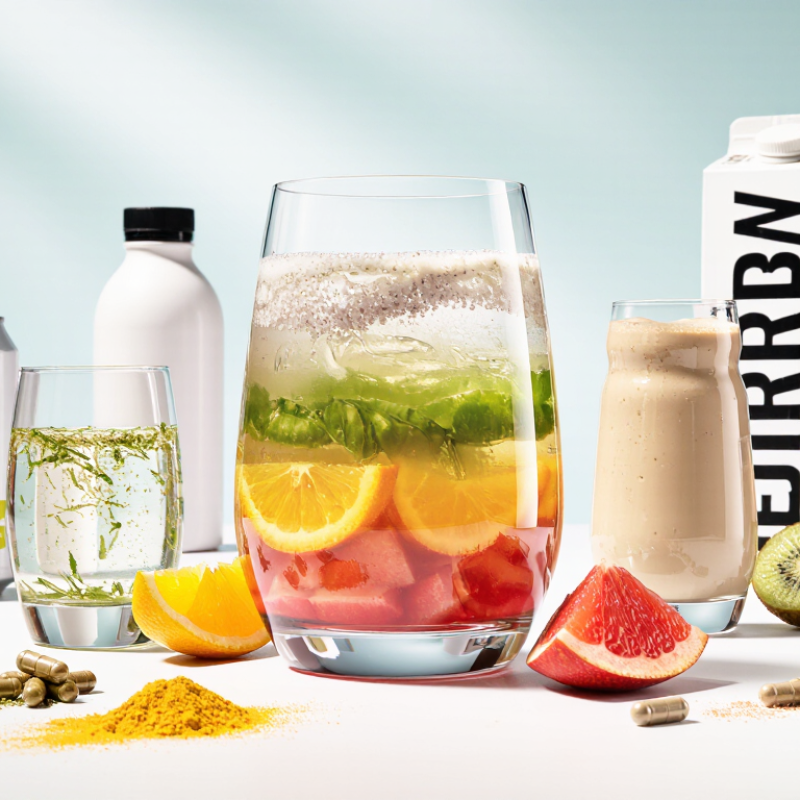
10 Best Functional Beverage Formulations for Global Buyers

Define Global Demand Using Innova’s Functional Beverage Launch Data

Global buyers need more than a list of popular ingredients. They need evidence of demand, usage occasions, and regional preferences. Innova’s functional beverage launch data can help define these signals across categories and markets. It highlights rising interest in hydration, energy, gut health, immunity, relaxation, focus, protein, beauty, healthy aging, and weight management. These themes support ten practical formulation directions for international development.

A hydration drink may combine electrolytes with light citrus notes and low sweetness. An energy formula could use caffeine carefully, with clear serving guidance. Gut-health beverages may include fiber, fermented ingredients, or gentle botanical profiles. Protein drinks need smooth texture, stable suspension, and familiar flavors. Relaxation products often suit evening routines, while focus formulas may need a clean taste and moderate stimulation. Regional launch data matters. A flavor accepted in one market may feel medicinal elsewhere. Formulators should also examine package size, claims language, and preferred consumption times. Data helps, but it does not replace local testing.

Tips: Compare launch activity with retail feedback and consumer interviews. Test sweetness at room temperature and when chilled. Review ingredient regulations in every target market. Avoid copying fast-growing concepts without checking repeat-purchase potential. Some trends look powerful but remain niche. That is where our judgment can fail. Use small pilot batches, record sensory results, and adjust one variable at a time. Need is often clearer than novelty.

Set Formula Targets with WHO’s <10% Free-Sugar Guidance and EFSA NRVs

For global beverage briefs, WHO’s free-sugar guidance offers a practical starting point: keep free sugars below 10% of total daily energy intake. WHO notes that reducing intake below 5% may provide additional benefits. These are population-level recommendations, not a formula target for every bottle. A 250 ml drink with 8 g of free sugars contributes 32 kcal from sugar, but the full-day context matters. Check sugars from juice concentrates, syrups, and added sweeteners, then assess the serving size buyers will actually drink. Small print can hide a large pour.

EFSA Nutrient Reference Values can help teams assess vitamin and mineral levels, but they are not universal amounts to add to every beverage. Match each nutrient to the intended serving and audience, and verify the relevant reference value before setting a claim or specification. For example, compare the vitamin amount in one 330 ml can with the applicable NRV, not an imagined “ideal” dose. Keep the calculation sheet. It helps procurement teams compare suppliers and makes reformulation easier when ingredients change. Sugar targets and nutrient levels may compete for space, taste, and stability. There is no perfect first draft. A simple bench test, clear serving assumptions, and a careful label review are better than confident guesses.

10 Best Functional Beverage Formulations for Global Buyers

Set Formula Targets with WHO’s <10% Free-Sugar Guidance and EFSA NRVs

WHO recommends keeping free sugars below 10% of total energy intake, and notes that reducing intake below 5% may provide additional health benefits. At a 2,000 kcal reference intake, these levels correspond to less than 50 g and less than 25 g of free sugars per day, respectively. These are daily diet benchmarks, not per-beverage limits. Use applicable EFSA nutrient reference values (NRVs) separately when setting vitamin and mineral targets.

Formulations 1–5: Hydration, Energy, Gut Health, Immunity, and Protein

Hydration formulas should taste clean after a long walk, not syrupy in a warm car. Grand View Research estimated the global functional beverage market at USD 125.3 billion in 2023, reflecting strong commercial interest in drinks with added benefits. That figure describes the market, not proof that any formula works. For a practical hydration base, formulators can balance water, electrolytes, acidity, and restrained sweetness. Keep the label readable. Too many additions can muddy the purpose.

Energy blends need a clear caffeine amount and a serving size that makes sense on a busy morning. Gut-health formulas may use fiber or live cultures, but ingredients and processing conditions matter; heat can affect some cultures. Immunity drinks should avoid promising disease prevention. The NIH Office of Dietary Supplements notes that vitamin C supports normal immune function, yet supplementation does not guarantee protection from infection. Small details matter: a citrus note can mask mineral bitterness, while a gritty fiber blend may discourage repeat use. Taste still wins.

Protein beverages need enough protein per serving, but texture and digestibility shape real-world use. The National Academies’ Dietary Reference Intake report sets the adult protein RDA at 0.8 grams per kilogram of body weight daily; needs vary by person. A 20-gram drink can be convenient, not universally necessary. I would test these five concepts with target buyers and shelf-life checks before scaling. Formulas rarely behave exactly as a spreadsheet predicts.

Formulations 6–10: Sleep, Focus, Beauty, Weight Management, and Botanicals

Sleep and focus formulations work best when their effects are modest and clearly described. A bedtime drink might pair a mild herbal infusion with a low-sugar base; a daytime version could use tea-derived caffeine and L-theanine. Neither should promise to treat insomnia or sharpen cognition. Ingredient dose, timing, and caffeine sensitivity matter. Small details matter: a powder that clumps in cold water can undermine an otherwise thoughtful formula. The 2024 IFIC Food & Health Survey found that 62% of U.S. respondents said healthfulness positively influenced food and beverage choices. That is useful context, not proof that consumers want every drink fortified.

Beauty and weight-management concepts need the same restraint. Collagen peptides, vitamin C, or soluble fiber may suit specific product goals, but claims require substantiation and careful review in each market. In a 2023 market estimate, Grand View Research valued the global functional beverage market at USD 125.3 billion, projecting 7.1% annual growth from 2024 to 2030. Growth does not guarantee repeat purchases. Taste does. A botanical blend can bring vivid ginger, mint, or hibiscus notes, yet earthy bitterness often needs balancing. For weight management, protein or fiber can support a more filling drink, but no formulation replaces an overall dietary pattern. That limitation should be stated plainly.

Validate Claims Against FDA, EFSA, Codex, and ISO 22000 Standards

10 Best Functional Beverage Formulations for Global Buyers

Functional beverages are expanding quickly. Grand View Research estimates a 7.5% compound annual growth rate through 2030. Global buyers should validate every benefit claim before approving a formula. Electrolyte, protein, fiber, botanical, and probiotic drinks require different evidence. In the United States, FDA rules distinguish nutrition claims from disease-related claims. EFSA expects clear cause-and-effect evidence for authorized health claims. Codex guidance supports truthful labeling and scientific substantiation. ISO 22000:2018 strengthens food safety controls across suppliers, production, and distribution.

A claim such as “supports normal digestion” needs more than an attractive ingredient list. Review the ingredient dose, serving size, target population, and study conditions. Check whether the evidence matches the finished beverage. A capsule study may not support a diluted drink. That mistake still appears in commercial reviews. The 2024 Global Functional Beverages Market report by Grand View Research also highlights rising demand for low-sugar and fortified products. Therefore, sugar levels, fortification limits, and local labeling rules deserve equal attention. FDA and EFSA interpretations can differ.

Tips: Build a claim matrix before formulation. Record each ingredient, dose, evidence source, and destination market. Use Codex principles for consistent labeling checks. Apply ISO 22000 procedures to supplier approval and batch traceability. Ask an independent regulatory specialist to review borderline wording. It costs less than correcting a rejected shipment. Still, no checklist replaces careful scientific judgment.

10 Best Functional Beverage Formulations for Global Buyers — Validate Claims Against FDA, EFSA, Codex, and ISO 22000 Standards
No. Formulation Concept Representative Ingredients per Serving Primary Functional Objective Potential Permitted Claim Direction FDA Considerations EFSA Considerations Codex / ISO 22000 Validation Focus Claim Readiness
1 Vitamin C Citrus Hydration Water; citrus juice concentrate; vitamin C providing at least 15% of the applicable daily value per serving; natural citrus flavor. Hydration support and contribution of vitamin C to normal immune-system function. “Vitamin C contributes to the normal function of the immune system.” Use an approved vitamin C source and meet the applicable nutrient-content criteria. Disease prevention or treatment claims are not appropriate for a conventional beverage. Use only an authorized vitamin C health claim and meet its conditions of use. The wording must not imply prevention or treatment of disease. Apply Codex food-hygiene and labeling principles. Under ISO 22000, verify ingredient identity, dosage, allergen status, traceability, sanitation, and finished-product vitamin C levels. Conditionally suitable
2 Calcium and Vitamin D Beverage Low-fat milk or fortified plant base; calcium; vitamin D; vanilla or cocoa flavor. Support for normal bone maintenance when the beverage supplies meaningful amounts of calcium and vitamin D. “Calcium and vitamin D are needed for the maintenance of normal bones.” Nutrient-content and health claims must satisfy U.S. labeling requirements. For plant-based versions, the source and fortification level must be accurately declared. Calcium and vitamin D claims require the food to be at least a source of the relevant nutrient under EU conditions of use. Control mineral uniformity, fortificant stability, microbiological safety, allergen controls for milk, and segregation of allergen-containing materials. Conditionally suitable
3 Electrolyte Rehydration Drink Water; sodium; potassium; carbohydrate such as glucose; citric acid; flavor; optional magnesium. Fluid and electrolyte replacement during or after substantial sweating or physical activity. “Helps replace fluids and electrolytes lost through sweating,” when supported by the formulation and directions for use. A conventional beverage may communicate hydration or electrolyte replacement without disease claims. Avoid implying treatment of dehydration or medical conditions unless the product is regulated accordingly. EU nutrition and health claims must be authorized; general hydration language should not be presented as an unauthorized health claim. Use Codex guidance relevant to sports and electrolyte beverages where applicable. Validate water activity, pH, microbial limits, electrolyte concentration, and filling controls through the ISO 22000 hazard-control plan. Conditionally suitable
4 Prebiotic Fiber Drink Water; inulin or fructooligosaccharides; soluble fiber; natural flavor; acidity regulator. Increase dietary fiber intake and support digestive regularity when the serving provides an effective amount of fiber. “Good source of fiber,” where the applicable threshold is met; “fiber helps maintain normal bowel function” only where the target market permits the wording and conditions are satisfied. Meet the U.S. definition and disclosure requirements for dietary fiber and use an accepted fiber source. Avoid unsubstantiated claims about treating constipation or restoring gut health. EU fiber claims have defined conditions of use. Specific prebiotic or gut-microbiota claims should not be used unless authorized for the relevant substance and wording. Control fiber identity, viscosity, sedimentation, fermentation effects, container compatibility, and gastrointestinal tolerance information. Verify supplier specifications and batch consistency under ISO 22000. Claim-sensitive
5 Live Culture Fermented Beverage Fermented milk or plant base; defined live bacterial cultures; optional fruit preparation; stabilizer if needed. Provide live cultures and a fermented beverage format; digestive-health communication requires market-specific substantiation. “Contains live cultures,” only when viable organisms are present at the declared end-of-shelf-life level. Declare the product identity and viable-culture information accurately. Do not use disease, immunity, or therapeutic claims without the appropriate regulatory basis. Probiotic terminology and claims are highly sensitive in the EU; generic “probiotic” or specific health benefits may not be accepted as ordinary marketing claims. Define culture identity, strain traceability, fermentation parameters, pH, cold-chain controls, shelf-life viability, and contamination controls within the ISO 22000 system. High validation need
6 Green Tea Caffeine Alertness Drink Water; green tea extract; caffeine; lemon flavor; optional L-theanine. Provide caffeine for increased alertness and attention in suitable adult consumers. “Caffeine helps increase alertness and improve concentration,” only where the applicable regional conditions and caffeine amount are met. Disclose caffeine where required and include population cautions for children, pregnant or breastfeeding women, or other sensitive groups as applicable. Avoid weight-loss or disease claims. EU caffeine claims have specific conditions of use and required warnings for high-caffeine beverages. Green-tea-extract claims must not exceed authorized wording. Control caffeine assay, extract contaminants, pesticide residues, heavy metals, and batch-to-batch variability. ISO 22000 verification should include supplier approval and analytical testing. Conditionally suitable
7 Iron-Fortified Fruit Beverage Fruit beverage base; bioavailable iron source; vitamin C source; flavor; acidity regulator. Deliver iron and vitamin C to support normal red-blood-cell formation and oxygen transport when nutrient thresholds are met. “Iron contributes to normal formation of red blood cells and hemoglobin.” Use an accepted iron ingredient and meet applicable nutrient-content criteria. Avoid claims that the beverage prevents or treats iron-deficiency anemia. Iron health claims require the beverage to be at least a source of iron under EU rules. Vitamin C may be used to support an authorized iron-absorption claim when conditions are met. Verify iron form, homogeneity, oxidation stability, sensory impact, contaminant limits, and packaging compatibility. Establish corrective actions for out-of-specification nutrient results. Conditionally suitable
8 Omega-3 Fortified Beverage Water or emulsified plant base; purified algal or fish-derived DHA; emulsifier; antioxidant; natural flavor. Provide DHA in a stable beverage format; cardiovascular or cognitive communication requires specific regulatory review. “Contains DHA,” with the quantitative amount declared accurately; additional claims require jurisdiction-specific authorization and conditions. Confirm the regulatory status of the omega-3 ingredient, comply with applicable allergen and source labeling, and substantiate any structure-function claim. Use authorized DHA claims only when the required daily intake and conditions of use are met. Source, purity, oxidation status, and population suitability require review. Control oxidation markers, heavy metals, persistent contaminants, allergen status for fish-derived materials, emulsion stability, and oxygen exposure during processing. High validation need
9 Reduced-Sugar Botanical Sparkler Carbonated water; botanical extracts such as ginger or peppermint; non-sugar sweetener; citric acid; natural flavor. Offer a lower-sugar beverage with botanical flavor and sensory refreshment. “Reduced sugar” or “sugar-free” only when the applicable regional nutrient-claim thresholds are met and the comparison or declaration is accurate. Meet the U.S. definitions for “reduced sugar” or “sugar free,” and disclose sweeteners and other required ingredients. Avoid implying that a botanical ingredient treats nausea, pain, or digestive disease. EU nutrition claims for “low sugars,” “sugars-free,” or “reduced sugars” have defined thresholds and comparative requirements. Botanical health claims require separate review. Control botanical identity, pesticide residues, adulteration, sweetener dosage, carbonation pressure, pH, and package integrity. Validate cleaning and allergen controls under ISO 22000. Conditionally suitable
10 Magnesium Mineral Beverage Water; magnesium salt; citrus flavor; optional vitamin B6; acidity regulator. Provide magnesium to support normal muscle and nervous-system function when the required nutrient amount is supplied. “Magnesium contributes to normal muscle function and normal functioning of the nervous system.” Use a permitted magnesium source and meet applicable nutrient-content and labeling requirements. Avoid claims about preventing cramps or treating neurological conditions. Magnesium claims require the product to be at least a source of magnesium under EU conditions of use. The authorized wording should be used accurately. Verify mineral assay, dissolution, sediment control, pH, packaging interaction, water quality, and microbiological safety. Maintain documented hazard analysis, monitoring, verification, and traceability under ISO 22000. Conditionally suitable
Regulatory note: FDA and EFSA requirements depend on the finished product, ingredient source, serving size, target market, and exact claim wording. Codex provides internationally recognized food-safety and labeling guidance, while ISO 22000 specifies a food-safety management-system framework rather than approving health claims. Final artwork and claims should be reviewed against the current requirements of each destination market.

FAQS

How should a beverage team use WHO’s free-sugar guidance?

WHO recommends keeping free sugars below 10% of daily energy intake. Below 5% may offer added benefits. These are population guidelines, not targets for every bottle. Check sugars from concentrates, syrups, and sweeteners.

How can EFSA Nutrient Reference Values guide a drink formula?

Compare nutrient amounts with the relevant reference value for the intended serving and audience. For example, assess one 330 ml can. Keep the calculation sheet. It helps when ingredients change.

What makes a hydration drink practical?

Balance water, electrolytes, acidity, and restrained sweetness. It should taste clean after a walk, not syrupy in a warm car. Too many additions can blur its purpose.

What should energy and gut-health formulas consider?

State the caffeine amount and serving size clearly. For gut-health drinks, consider fiber or live cultures and how processing affects them. Heat can affect some cultures. A bench test may reveal what a spreadsheet misses.

Can an immunity drink promise to prevent illness?

It should not promise disease prevention. Vitamin C supports normal immune function, but supplementation does not guarantee protection from infection. Citrus flavor may also mask mineral bitterness.

How much protein should a protein beverage contain?

The adult protein RDA is 0.8 grams per kilogram of body weight daily, though needs vary. A 20-gram drink can be convenient, but it is not necessary for everyone. Texture matters.

What evidence should support a functional beverage claim?

Check the ingredient dose, serving size, target population, and study conditions. Evidence from a capsule may not support a diluted drink. That mismatch is easy to overlook.

Which checks help verify claims and food safety?

Review FDA, EFSA, and Codex requirements for the intended market. Use ISO 22000 procedures for supplier approval and batch traceability. An independent review can help with borderline wording.

What should teams record before formulation?

Build a claim matrix with each ingredient, dose, evidence source, and destination market. Review sugar levels and labeling rules too. No checklist replaces careful scientific judgment.

Conclusion

This guide presents 10 practical Functional Beverage Formulations designed for global buyers seeking clear, compliant, and market-relevant product concepts. It begins by interpreting global demand through functional beverage launch data, then translates consumer needs into measurable formula targets. These targets include responsible sugar control in line with the World Health Organization’s recommendation to limit free sugars, as well as appropriate nutrient reference values for different markets.

The first five formulations focus on hydration, energy, gut health, immunity, and protein, while the remaining concepts address sleep, focus, beauty, weight management, and botanical-based wellness. Each formulation is discussed from a development perspective, including ingredient purpose, positioning, and suitability for international commercialization. The guide also emphasizes responsible claim validation, requiring alignment with applicable requirements from the FDA, EFSA, Codex, and ISO 22000 food safety principles. Together, these frameworks help buyers evaluate functional beverage concepts that are practical, transparent, and adaptable to diverse regulatory environments.

Elena

Elena

Elena is a highly skilled marketing professional with a deep expertise in our company's product offerings. With a passion for innovative strategies and a keen understanding of market dynamics, Elena plays a pivotal role in driving our brand forward. She regularly contributes to our professional......